Spotting Fakes and Examining Perforations
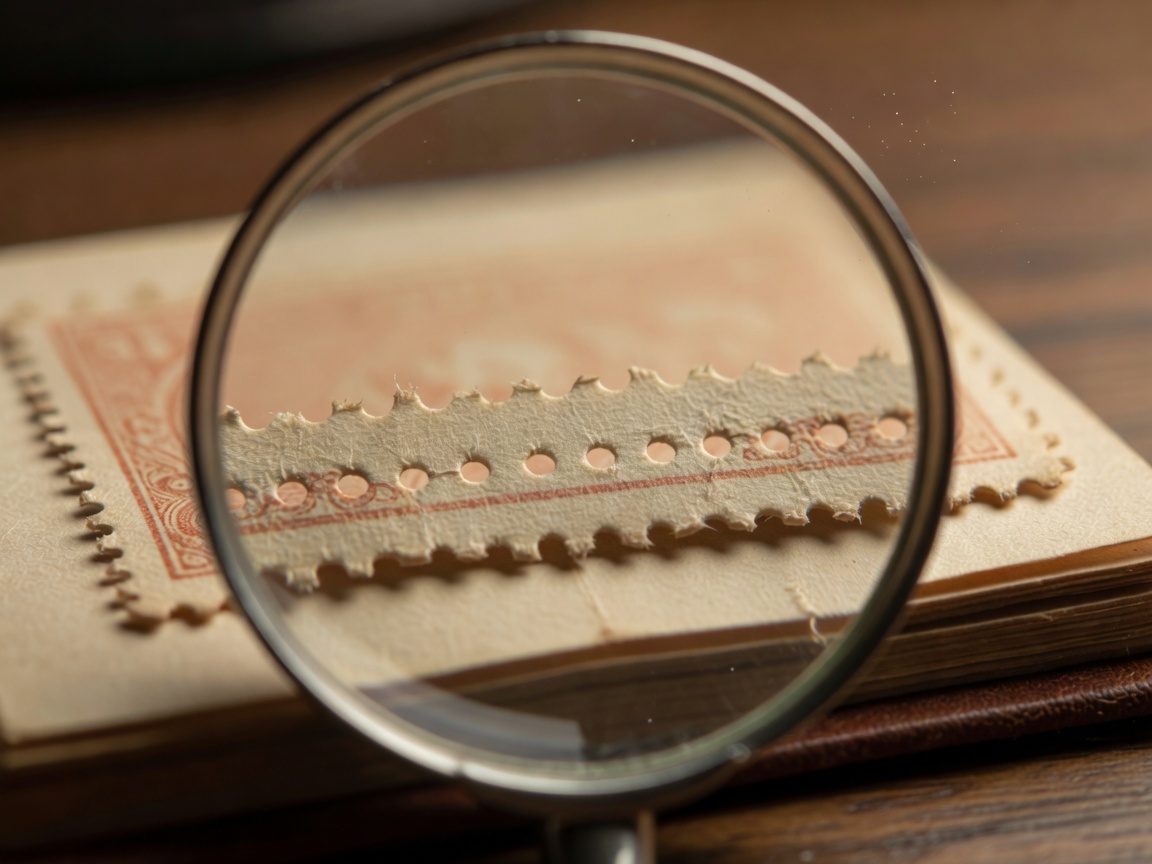
Philately requires a keen eye. Because stamps are essentially printed paper, they are susceptible to forgery and alteration. For beginners, a high-quality loupe (magnifying glass) and a perforation gauge are the two most critical tools.
Watermarks & Cancellations
Many classic stamps were printed on paper embedded with watermarks to prevent counterfeiting. By using watermark fluid (or simply holding the stamp to a strong backlight), you can identify the origin paper. Additionally, 'used' stamps feature cancellation marks. Sometimes, a rare cancellation on a common stamp is worth more than the stamp itself.
Forged Overprints
One of the most common fakes a beginner will encounter is the forged overprint. Scammers take a low-value base stamp and print a high-value historical mark over it. Look closely at the ink impression. Genuine typography presses push the ink deep into the paper fibers, leaving a slight embossed feel, whereas modern laser-printed fakes sit flat on the surface.